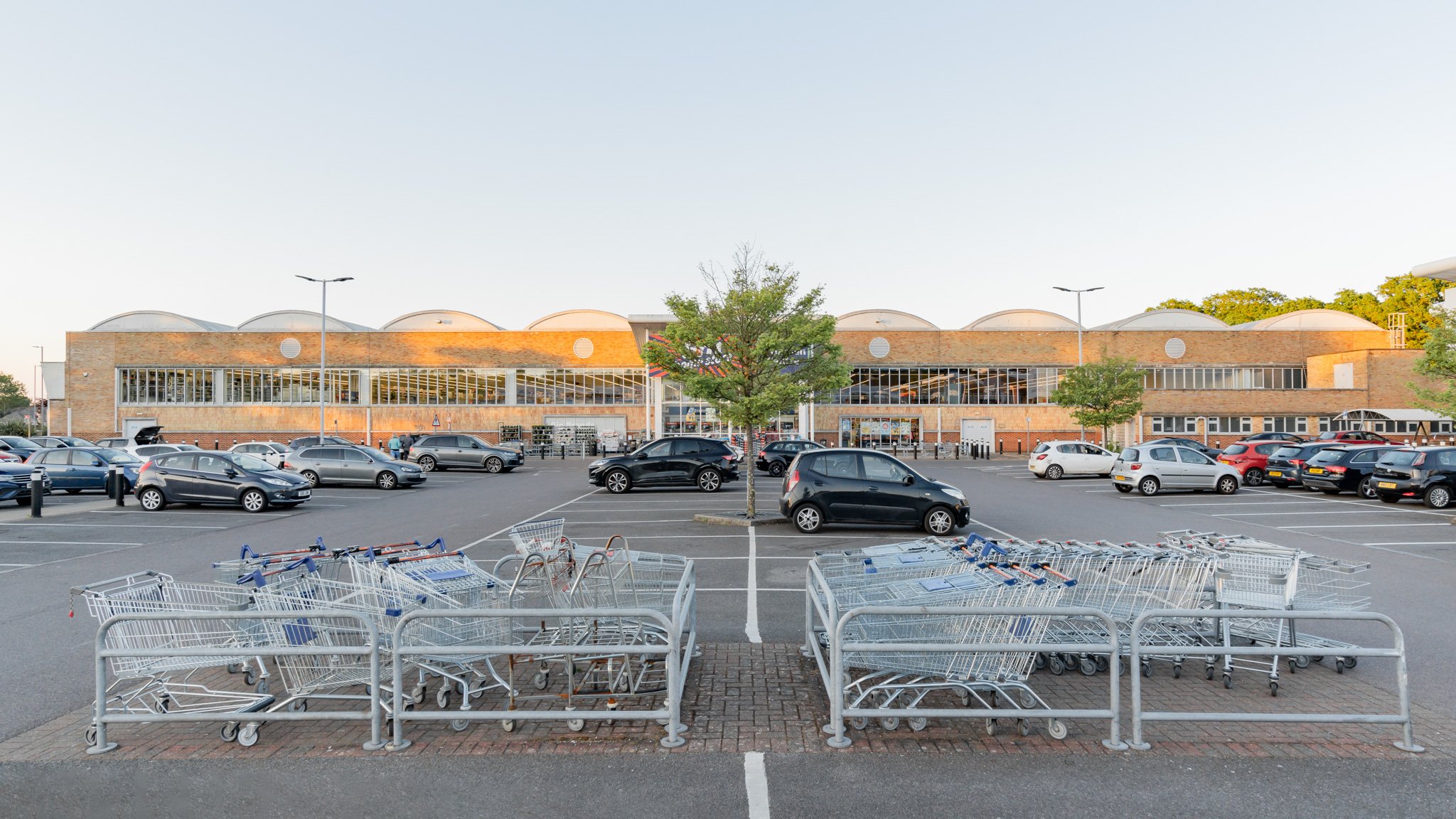
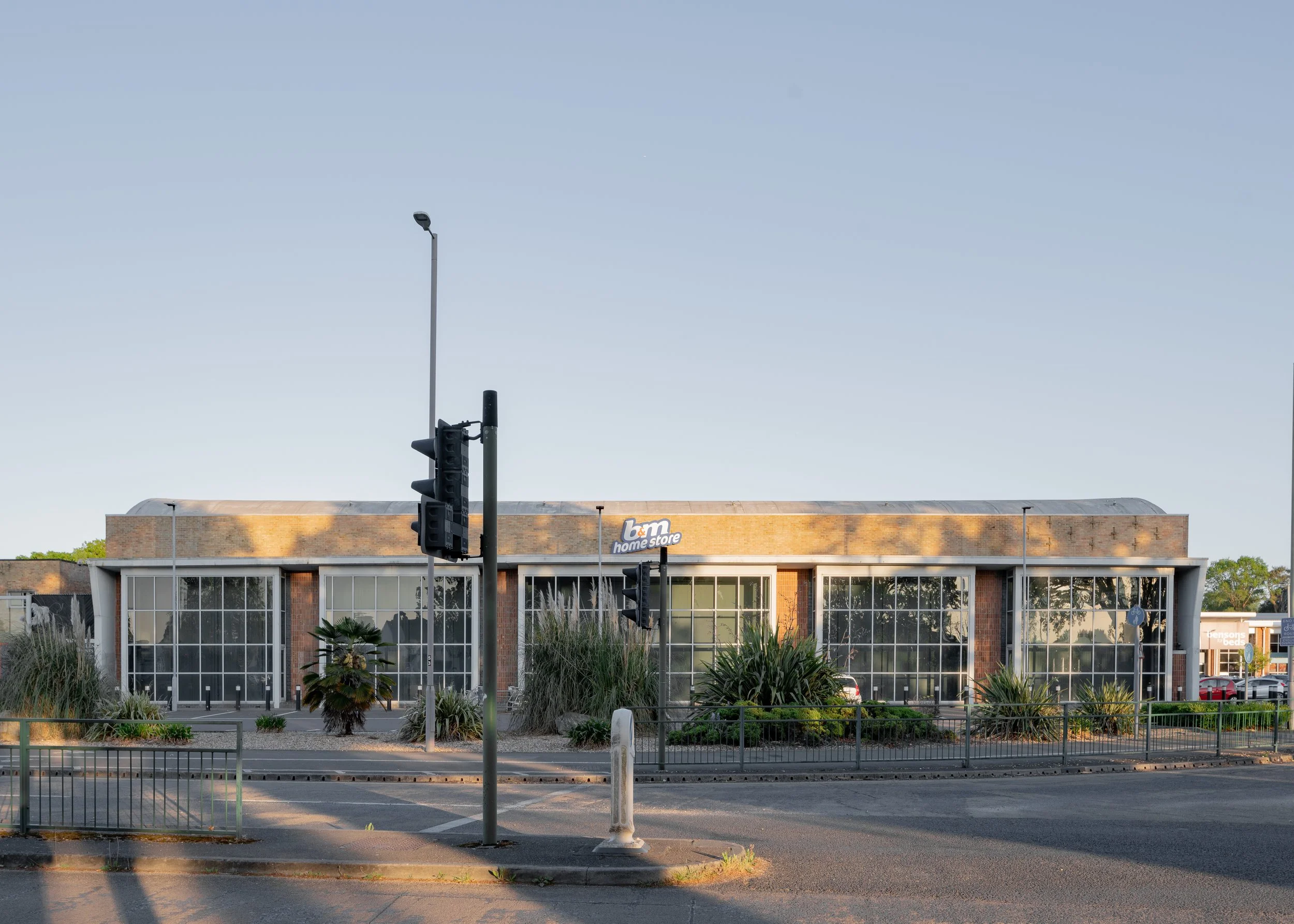
Set within Bournemouth’s Strouden Park, the Mallard Road Bus Depot is one of those structures that reveals its significance the longer you spend with it. Built between 1950 and 1951 for Bournemouth Corporation, the depot was engineered to house buses and trolleybuses at a time when public transport was central to the town’s identity. What stands today is more than a remnant of that era — it’s a quietly radical piece of mid‑century structural design.
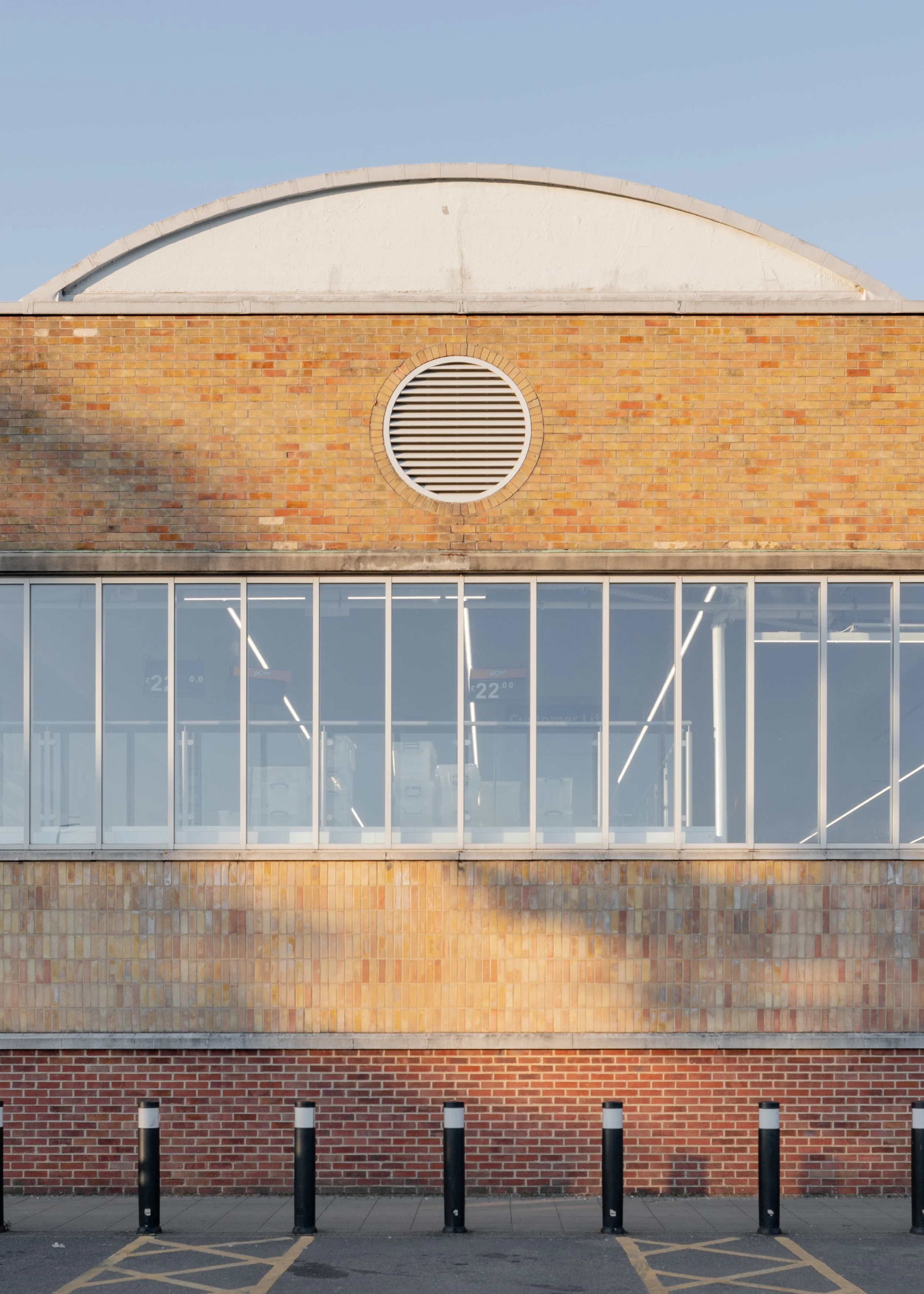
The defining feature of the depot is its thin‑shell reinforced concrete roof, formed by nine cylindrical vaults. At the time of construction, it was the largest span of shell construction in Britain and the first to be post‑tensioned. As a photographer and filmmaker, this is the kind of detail that draws me in. The roof isn’t just an engineering achievement; it’s a sculptural form, a piece of structural expression that still feels contemporary in its ambition.
Although the depot’s operational life ended in 2007, its Grade II‑listed garage remains, now adapted for retail use. The building’s distinctive humped roof continues to anchor the site, a visual reminder of Bournemouth’s transport history. Documenting it today means capturing both its architectural intent and the way it has been absorbed into a new commercial landscape.
One of the most compelling elements to photograph is the set of original depot doors. Retained through redevelopment, they act as a subtle but powerful link to the building’s past. These doors once framed the daily movement of Bournemouth’s fleet; now they stand as architectural artefacts, holding the memory of the site’s former life.
For me, the value of documenting a structure like the Mallard Road Bus Depot lies in revealing its layered identity, the innovation of its engineering, the clarity of its form, and the traces of its civic history. Even utilitarian buildings can carry cultural weight, and visual assets play a role in preserving that story. The depot may no longer serve its original purpose, but its architecture continues to speak, offering a reminder of the ingenuity and ambition embedded in mid‑century design.