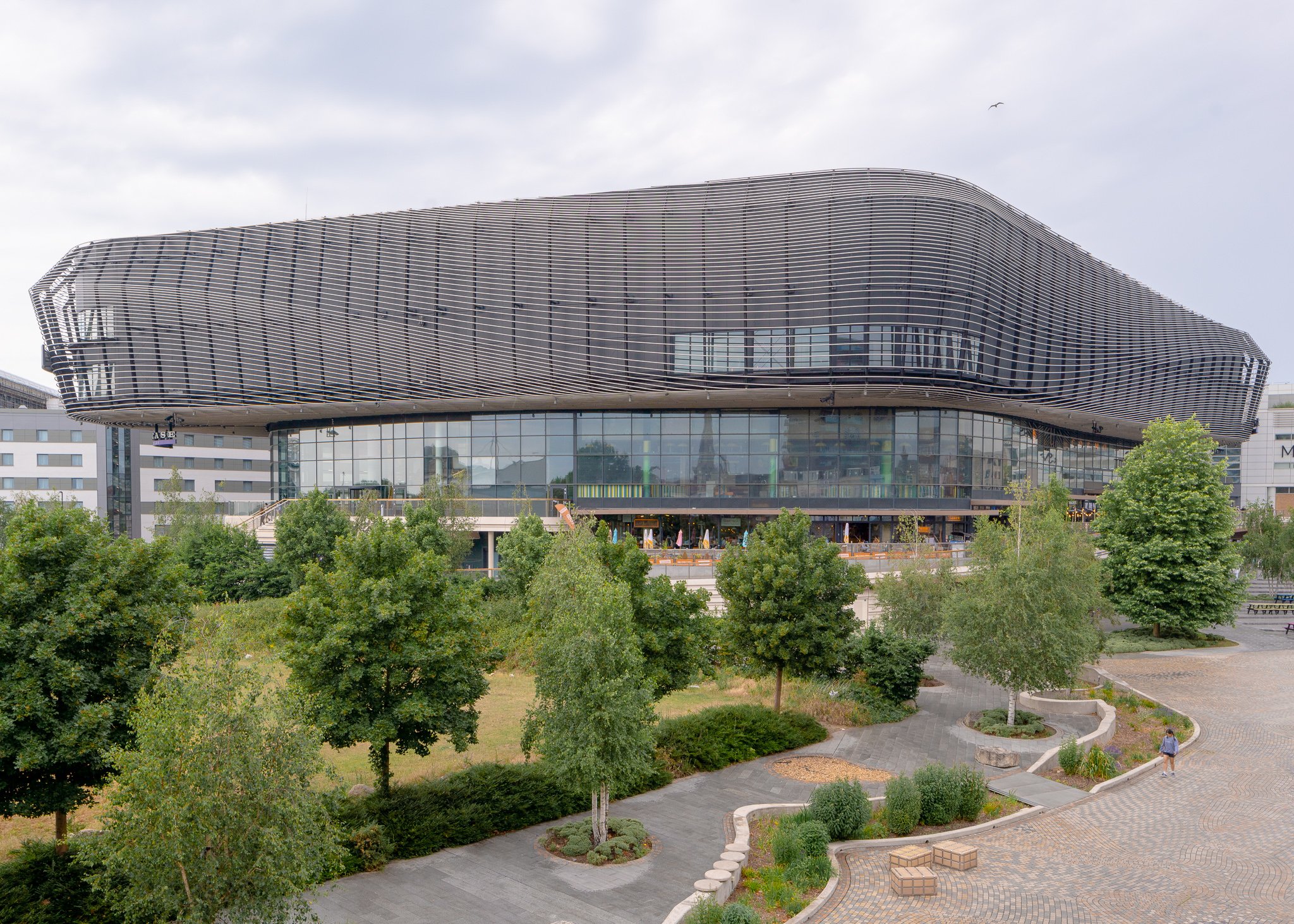
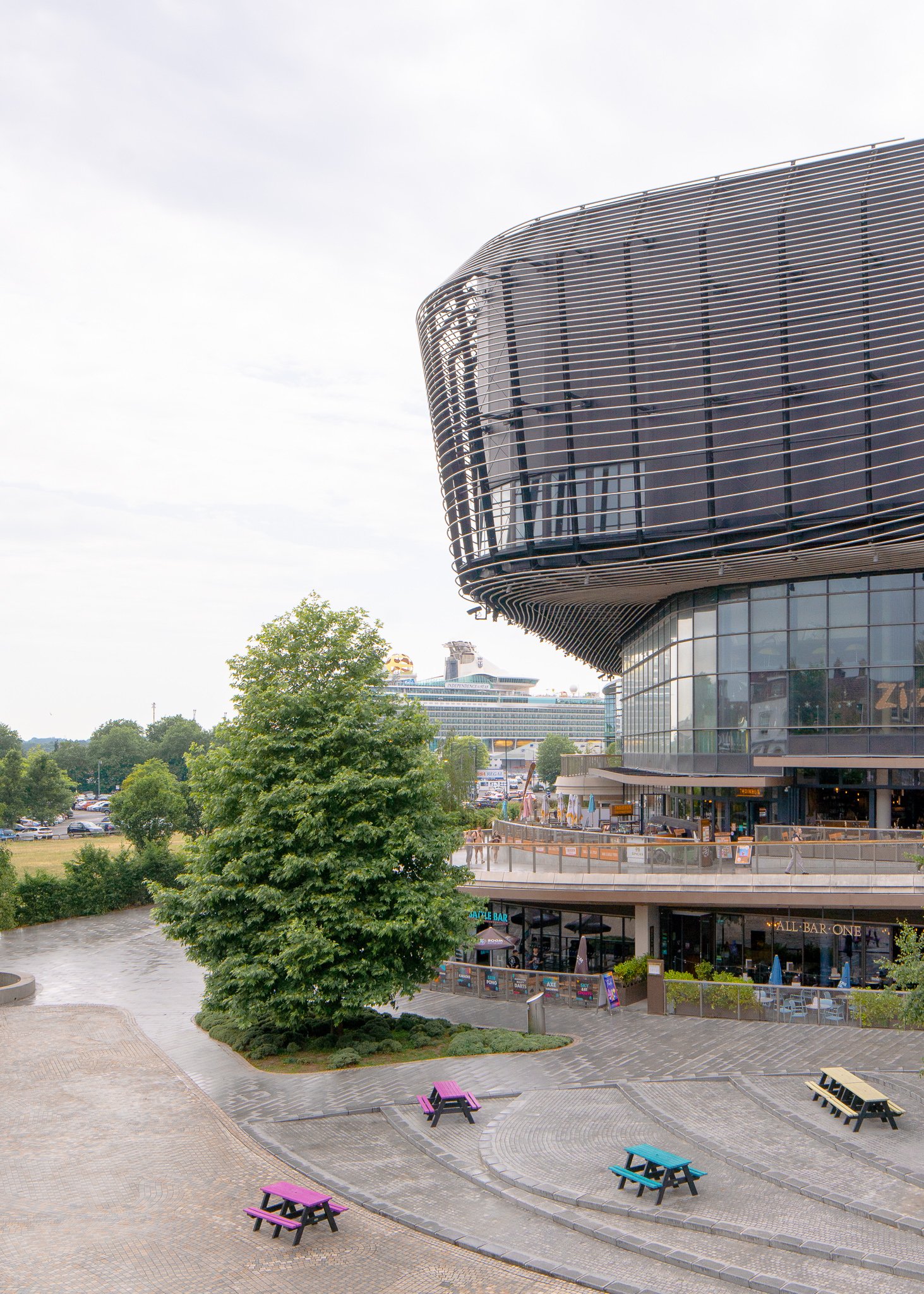
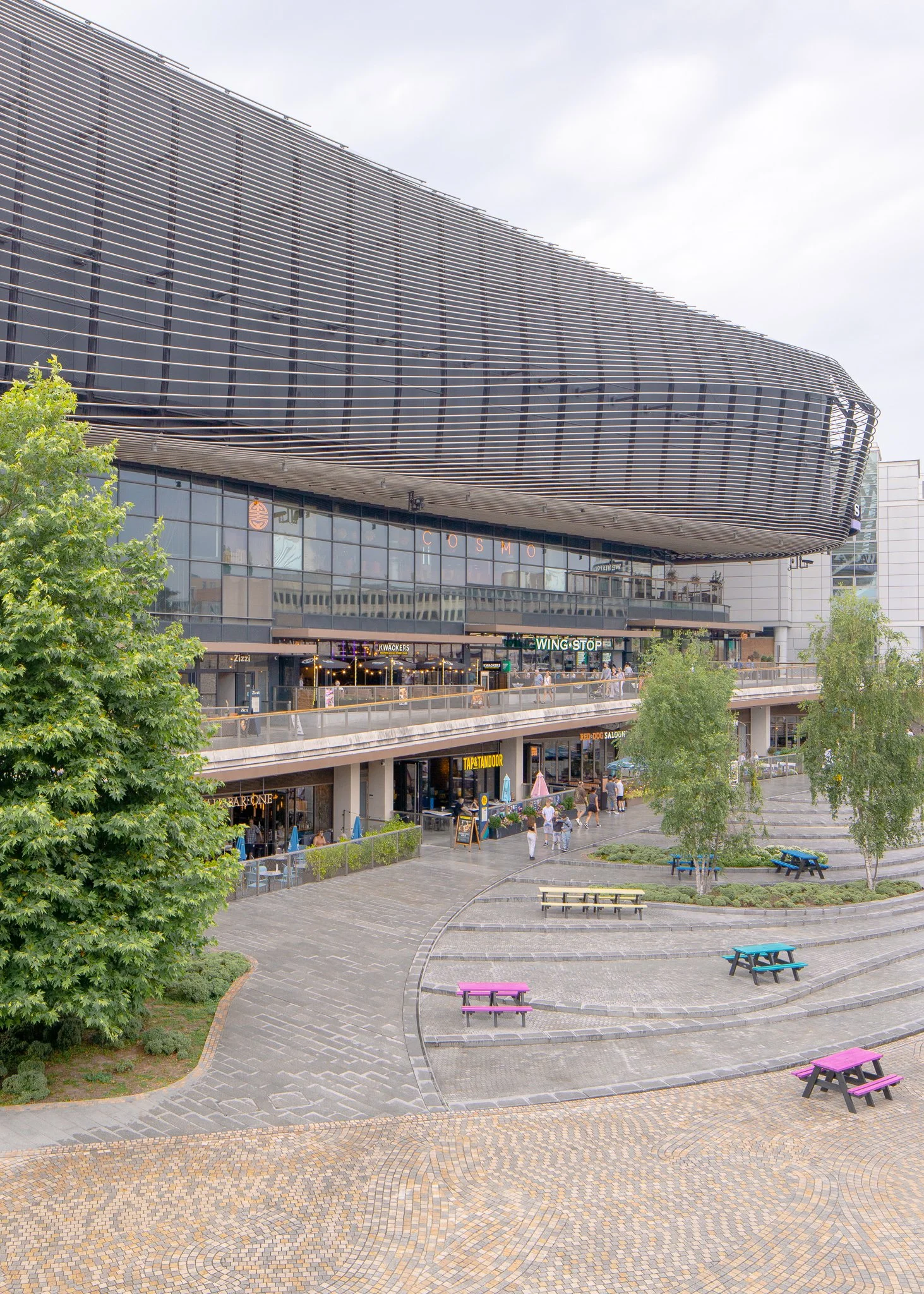
Southampton reveals itself gradually. Its architecture carries layers of industry, resilience, and reinvention, often expressed not through spectacle but through texture, tone, and the quiet confidence of structures that know their place in the city’s story. On a recent visit, my attention settled on Watermark @Westquay, completed in 2017.
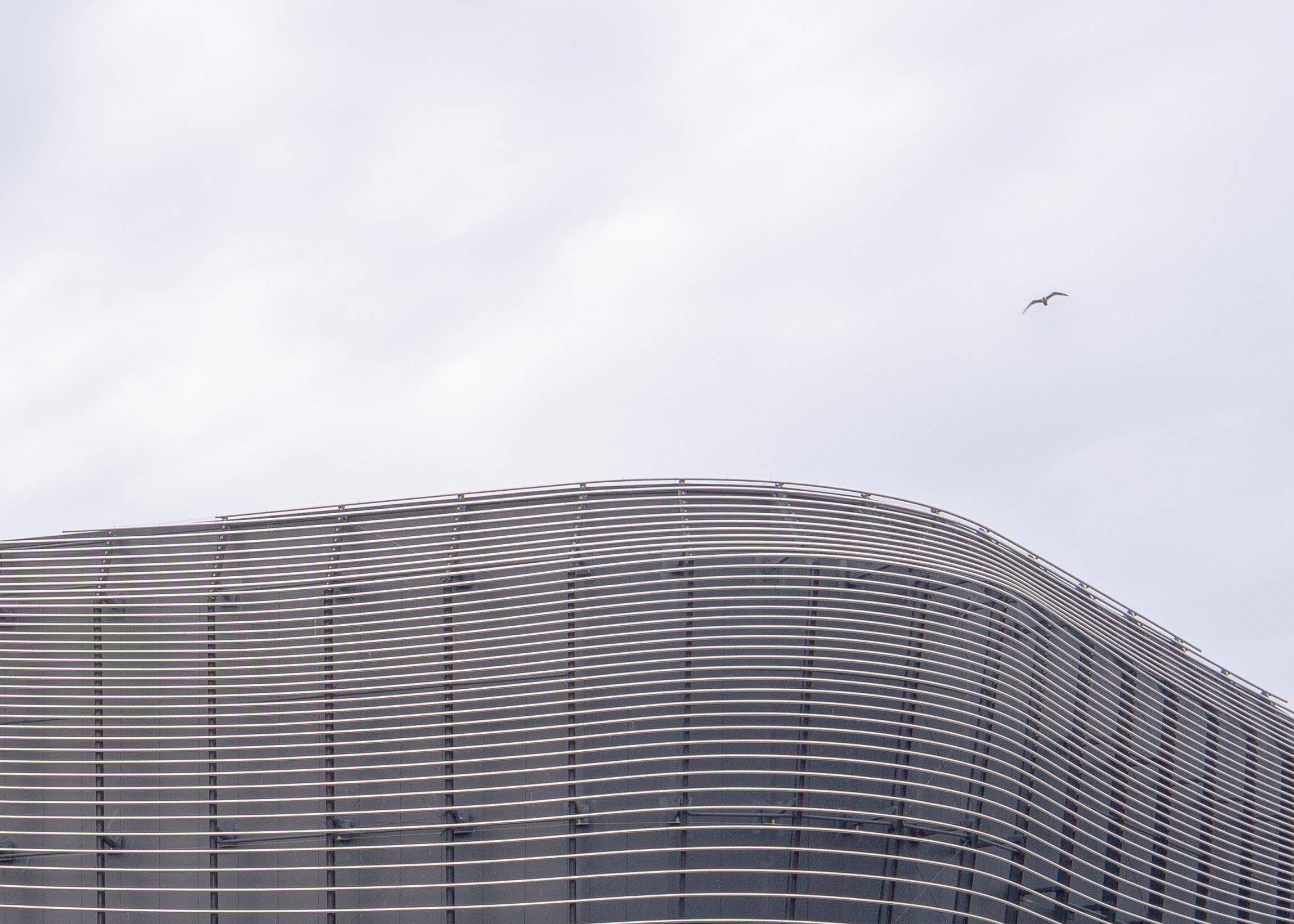
As a photographer and filmmaker, I’m drawn to forms that communicate without theatrics. Architecture doesn’t need to shout to assert presence. When it’s successful, it offers a kind of grounded certainty, a sense that every line and void has purpose. Watermark does exactly that. Its upper form invites questions: Why this silhouette? Why this rhythm? Why here? Buildings rarely arrive at these decisions by accident. They are responses to site, to memory, to ambition.
This corner of the city carries its own history. Long before Watermark introduced leisure, cinema, and dining to the area, the site was home to the Pirelli cable factory. For much of the twentieth century, this was a place of production and purpose. Cables manufactured here powered infrastructure across Britain, connecting cities and shaping modern life. The factory closed in 1990 after structural failures, but its presence lingers in the collective memory of the place.
What interests me most is the building’s willingness to be present. It doesn’t retreat into neutrality or attempt to blend into its surroundings. Instead, it leans into contrast: glass against stone, sharp geometry against the grounded weight of history. Through the lens, these tensions become part of the narrative. They reveal what it means to build in a city shaped by movement, trade, and continual transformation.
Watermark is more than a leisure complex. It’s a piece of architectural storytelling, a structure that acknowledges the past while projecting forward. Documenting it is about capturing that dialogue — the interplay between memory and modernity, between form and context, between what the city was and what it is becoming.